ABRP gives impossible plan (dipping into negative SoC) if steep hill descent is shortly before destination
ABRP can create plans that would have the driver stranded. This can happen if the destination target SoC it quite low and there is a lot of elevation descent shortly before the destination.
Even if there is charging, it will propose to leave with too low charge. Clearly ABRP only checks the SoC at the destination is accoring to settings, but does not make sure it never goes below that (as a safety margin) or even negative somewhere on the way.
The issue is not specific to ABRP on any particular platform, but most likely stems from the route planning backend.
Example plan:
https://abetterrouteplanner.com/?plan_uuid=724c028a-40f7-494c-99c9-63cc81572855
This is a short route with a steep hill in between the start and destination points. The plan produced expects the car to reach -2% at the top of the hill, while regen then gives it back enough to hit the target SoC at the destination, which I set to 2% here to create the example. Even though charging is done at the start, it still suggests departure at too low SoC.
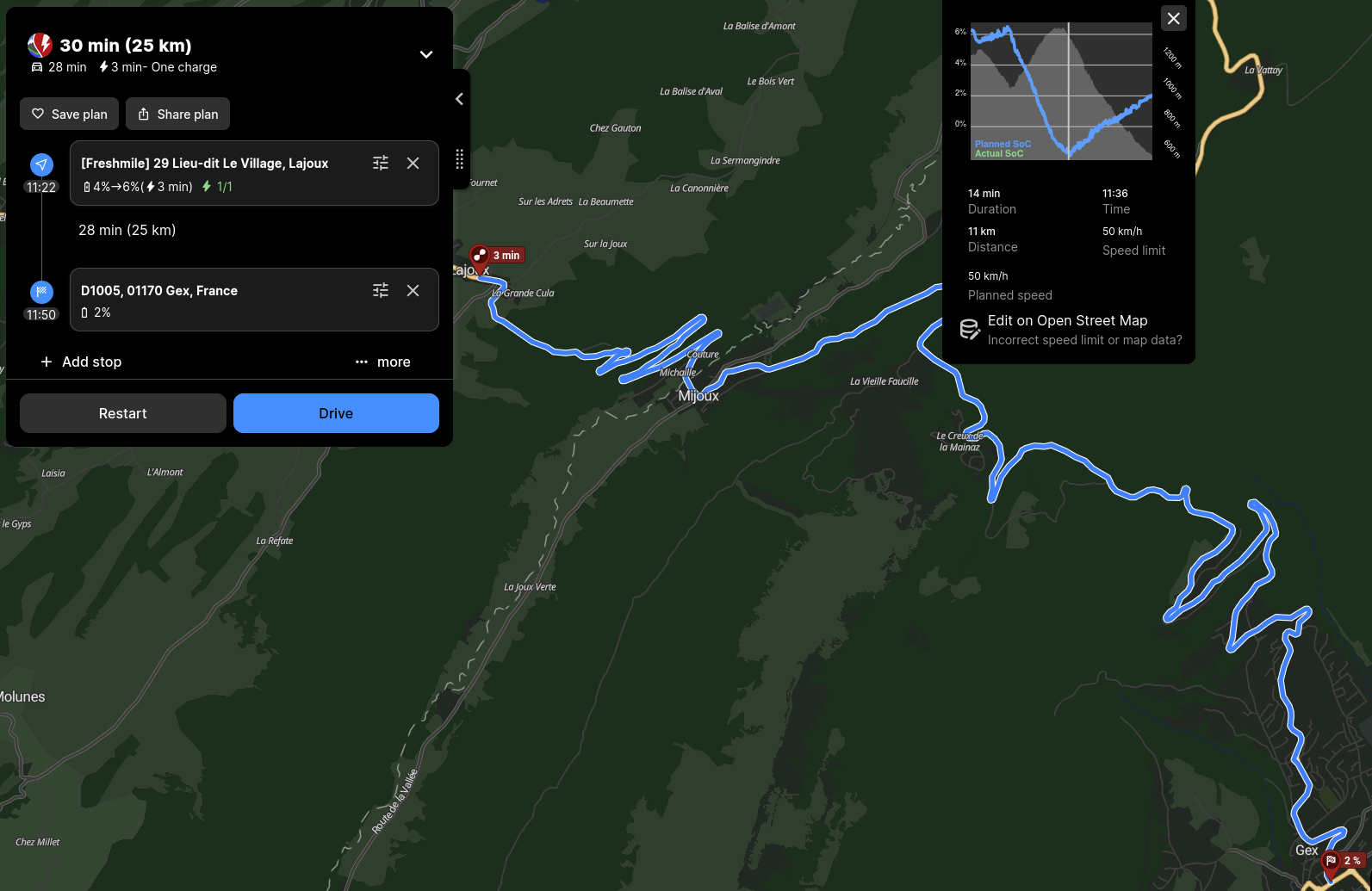
This is clearly a fringe case, but may in such rare occasions result in the driver being stranded. In the real world, most people will have ~5-10% SoC destination target, providing some resilience (unless they dip into their safety margin), but high enough elevation change (1+km) can still provoke this issue, especially with cars that have smaller batteries.
A proposed solution would be for ABRP to check that the SoC does not go below the “destination SoC“ anywhere on the way, since it clearly knows the SoC values along the route (that it displays when a point on the route is selected as in the screenshot). Then adjust the previous charging stops based on the lowest SoC point on the route instead of at the destination.
- Where does this happen?
- ABRP version number (found at bottom of settings menu)
Log in to comment and vote
Comments2
Tomas Komarek
Apr 13, 2025
Apparently the upper bound is not handled correctly too:
https://abrp.featurebase.app/en/p/trip-planner-allows-battery-to-go-above-100percent-soc-during-2
I just checked it and the described behaviour of going over 100% through regen happens, even while in reality the car would stop regening and use friction brakes in order not to overcharge the battery. This may cause inability to reach the destination as planned.
In principle, this will happen much more often than the under 0 I’m reporting, but it’s less dangerous because there is a lot of room to adjust the plan (the issue happens at the start, not near the end). Especially when using live SoC data, it should get handled automatically by adjusting the plan, but it still means the original plan is defective.
Tomas Komarek
Apr 13, 2025
This is of course not unique to steep descent before arrival at the destination, but can be triggered also by descent on arrival to a charge stop.
So in simple terms, the issue is blindly planning the travel plan leg based solely on SoC at its end instead of checking for a potentially lower SoC that may happen somewhere on the way.
Whether to fix this by comparing against the destination SoC or charge stop SoC setting values and making sure they are maintaned at all points of the trip, is up for a debate. Thinking about it, charge stop would be more suitable - people may use rather high destination SoC in some cases where they want to continue driving later without charging. But there surely should be such a check and it surely should not be against zero, keeping some margin.